WISPAL. Monetization engine for creators.
2025 - 2026 · wispal.me · Founder
Wispal is a platform for private, one-to-one paid interaction between creators and their audience: real-time chat, video and audio calls, paid content, and subscriptions, with preference-based matching to connect the two sides. Payments, translation, and AI assistance are built in. The idea first emerged during the pandemic; Wispal is the product it became.
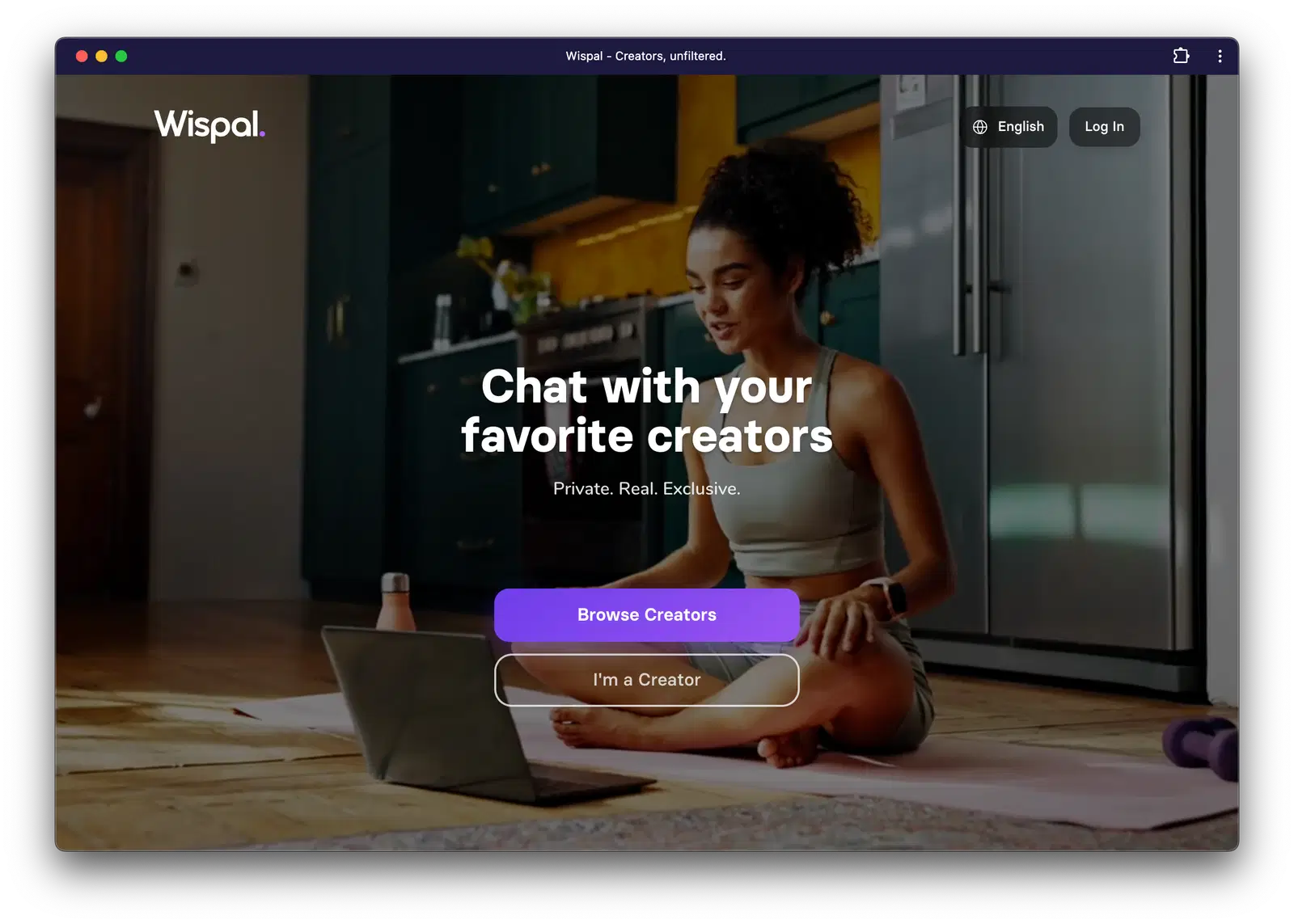
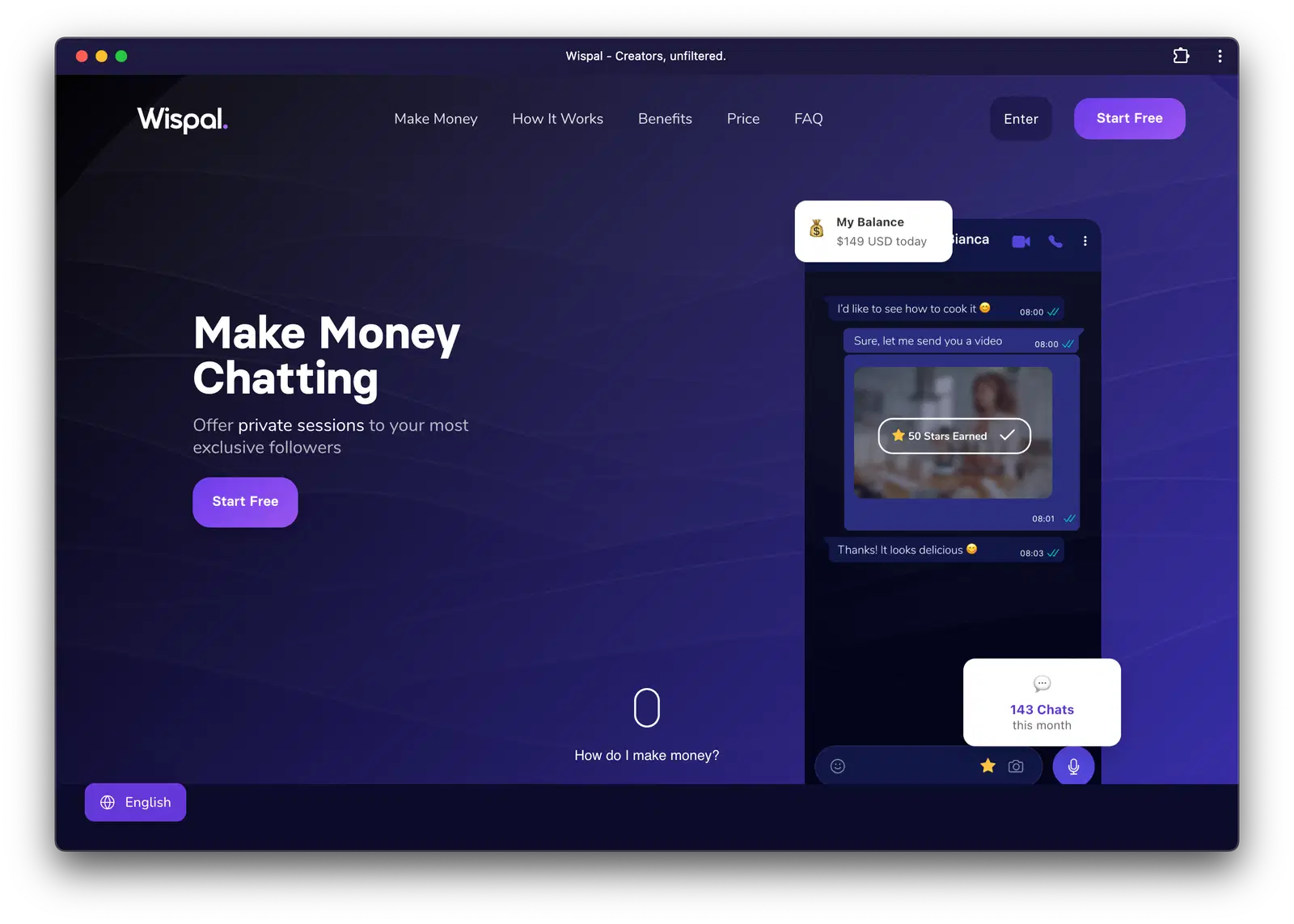
A client sets preferences and gets matched to creators, opens a private thread, and pays per message or per minute of call. Wispal sits in the middle: it holds the money, translates across languages in real time, and settles earnings to the creator. Built and running in production across seven languages.
INSIGHT
85% of people are unhappy with their 9-5 jobs. New generation of experts and creators are looking for more flexible and rewarding ways of work. Plenty of them want to earn online, but the accessible paths are brutal: making content or streaming is a real skill most people lack. One-to-one is something almost anyone can do, yet little exists to monetize it well. The harder wall is money and trust. User-to-user payments are difficult to run compliantly across borders, and neither side moves first: the client will not pay a stranger, the creator will not work unpaid. Wispal sits in the middle, handle payments and matching, and a conversation becomes income.
WHAT I BUILT
- Real-time chat and messaging
- One-to-one video and audio calls
- Per-minute call billing
- Preference-based matching system
- Wallet and payments system
- Paid content and paid conversations
- Automatic message translation
- AI writing assistant
- AI conversation memory
- Content moderation for user content
- Recurring subscriptions
- Referral and affiliate programs
HOW IT'S BUILT
Architecture, split across several repositories:
- Consumer app: a Vue 3 progressive web app for creators and clients
- Backend: a Node.js and Express API with a Socket.IO real-time layer and scheduled jobs, on MongoDB Atlas
- Panel: a separate B2B dashboard for referral and affiliate programs
- Business-context repo and technical-documentation repo: the written source of truth the AI agents build against
- Real-time calls over Daily.co (WebRTC); Firebase for auth and push; KYC and card/payment rails integrated
- AI on Google Gemini via Vertex AI, with DeepL as a translation fallback: writing copilot, conversation memory (vector search), moderation, transcription, and translation
How it is built, an AI-augmented workflow:
- Agents build against the business-context and documentation repos, so they work with full product and domain knowledge, not guesses
- Guardrail hooks hard-block irreversible or dangerous actions and route production changes to explicit approval
- A money-flow sanity suite runs before every deploy, exercising the paths where money moves end to end
- Browser-driven visual checks open the real app as each persona and verify screens, so UI is tested, not assumed
- It started mostly manual; today most of the build runs through this agent workflow
DECISIONS
AI to close real gaps, not for hype. Watching beta testers surfaced concrete problems: long conversations were hard to remember, people did not know what to say, and users wanted to talk to creators who did not speak their language. Each became a feature: conversation memory, an AI writing assistant, automatic translation. The cost is real AI infrastructure, latency, and moderation overhead, which I only took on because each feature answered a problem users actually hit.
Human-verified over AI avatars. The rest of the market races to sell AI avatars you pay to chat with. I bet the opposite: in a world flooded with synthetic everything, a verified human is what carries a premium. Creators must record a voice message live in the browser, not upload a file, to prove a real person is there. The tradeoff is onboarding friction and turning away pure-AI supply, in exchange for trust I can price.
Moderation as a real safety layer. User content and user-to-user payments carry heavy compliance obligations, so every message runs through an AI review that flags risk in layers. Clear violations are blocked automatically; the most serious, anything involving a minor, is blocked and reported to authorities; ambiguous cases go to human review. The cost is false positives and review load, accepted because a single leaked violation is the kind of thing that ends a company.
OUTCOMES
- Raised $35,000 in angel capital to build it at a $1.2M valuation
- Built the full product end to end: app, backend, studio panel, payments, AI, and moderation
- Tested with around 30 creator beta testers, with positive feedback from relevant industry people
- Inbound interest in acquiring the technology
LEARNINGS
- A tool is easier to launch (you win one side) but worth less; a marketplace is worth more but hard to match. Either can win, OnlyFans is a tool that brings no clients, but only if it is 5-10x better or removes a real blocker.
- Whether tool or marketplace, start in one vertical: the needs and the matching are clearer, and you grow from there.
- Marketplaces are cash-hungry to bootstrap. Without investment or a 10x wedge the cold-start economics are brutal, and I have built one before and hit exactly that.
STATUS
Parked. The product is built and the technology works, but active development has stopped.