SENSIDOC. Smart triage + doctor consultation during COVID.
Jun 2020 - Dec 2020 · Founder
A pandemic telemedicine app, built in mid-2020 by a volunteer group of entrepreneurs. It ran a two-sided subsidy: patients who paid funded consultations for those who couldn't, and doctors matched each paid visit with a free one. Screening opened with an audio-based COVID triage that returned a probability from your voice.
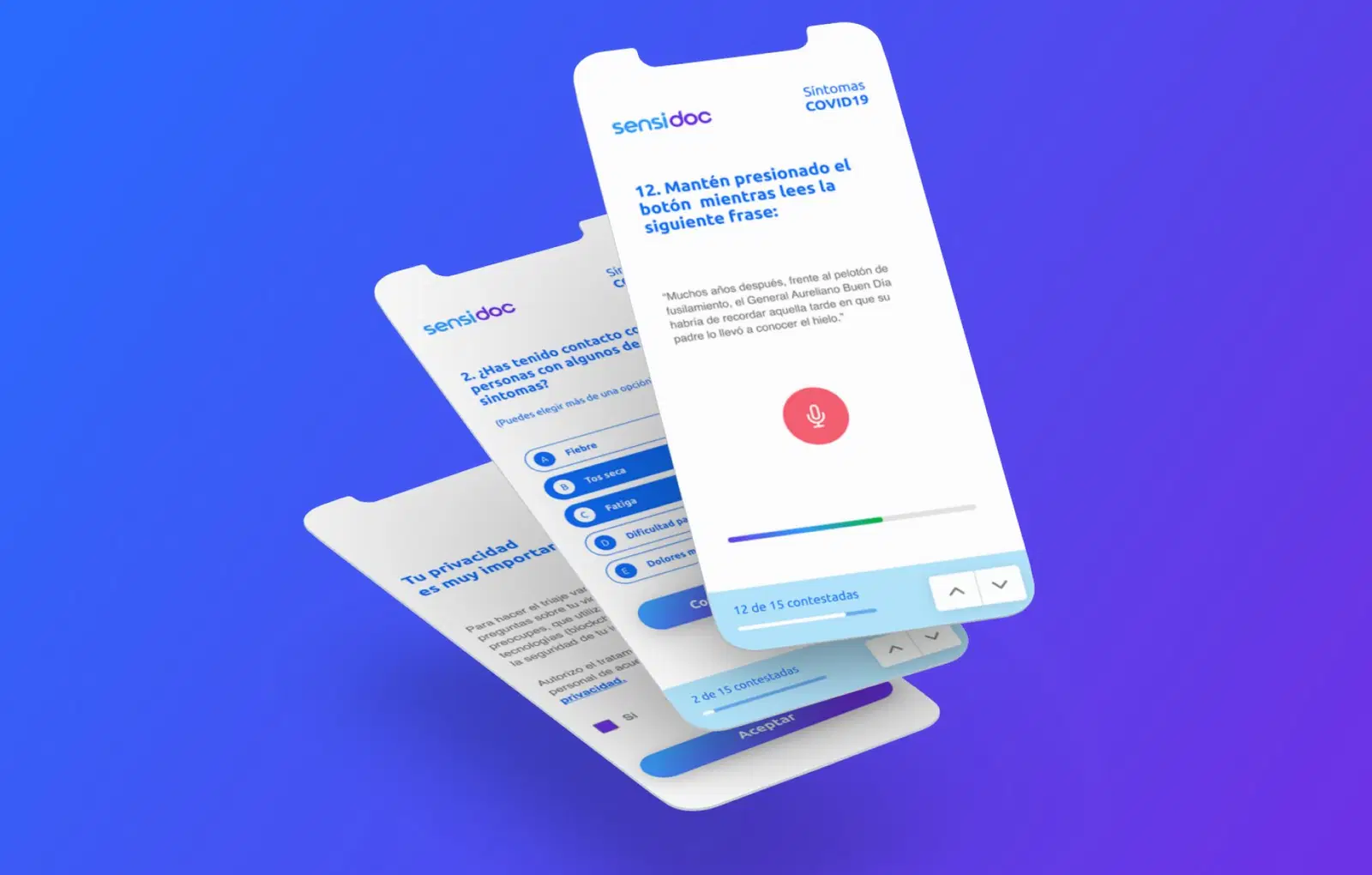
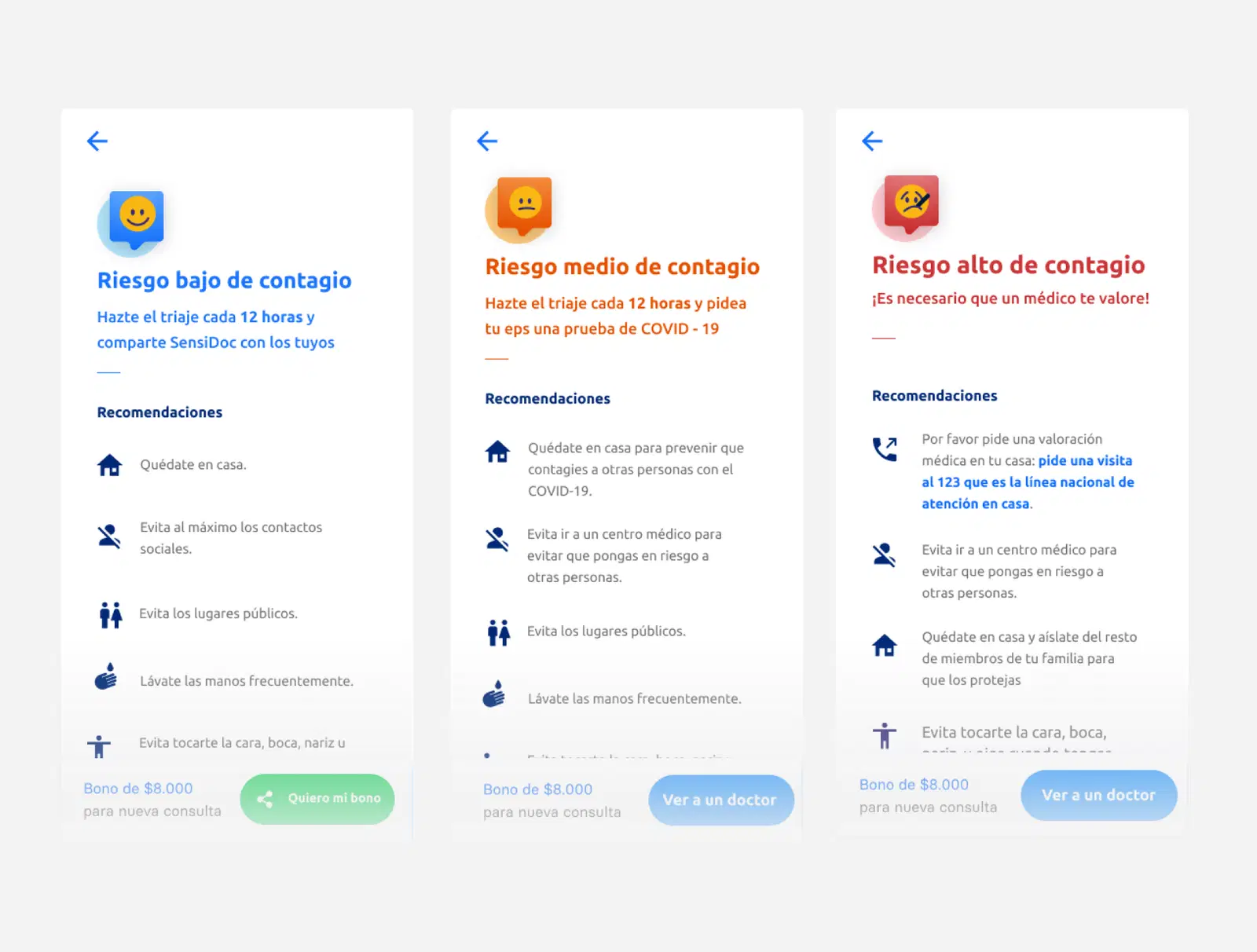
The flow started with triage: a few questions on travel, contacts and age, then you recorded yourself saying the vowels and a few words. A trained model returned a high or low COVID probability. This was 2020, before the AI hype, running in a real product with real users. Then you either paid for a consultation or joined the subsidy list.
INSIGHT
Healthcare is one of the most essential things in life. However, more than 60% of the global population doesn’t have access to basic health services. Sensidoc uses technology to bring online medical attention to those who can’t afford it.
WHAT I BUILT
- Audio-based COVID triage
- Symptom questionnaire
- Pay-or-subsidy patient flow
- Interleaved subsidy waitlist
- Doctor pay-it-forward matching
- Video consultation booking
HOW IT'S BUILT
One app carried the whole flow: questionnaire, audio capture, probability, then a booked video consultation. The screening model (voice plus questionnaire, returning a COVID probability) was built by a dedicated AI expert under the CTO and CEO, with three doctors on the team validating the screening and flow. It was never a certified diagnostic tool. I led product and designed the experience end-to-end. The subsidy itself was not exotic technology; it lived entirely in how the two waitlists were ordered.
DECISIONS
Interleaved the paid and free waitlists two-to-one. Rather than clear every paying patient before touching the free list, we served two who paid, then one who couldn't, and repeated. That kept free care flowing continuously and made the roughly 30% subsidized rate a property of the system, not a promise we had to remember to keep. The cost: payers waited longer than they would in a pure paid queue, and revenue per slot was diluted by design.
Extended the same pay-it-forward deal to doctors. For each paid consultation a doctor also took one for free, and none charged much either way. It gave us medical supply cheaply and aligned everyone around the mission during the crisis. The tradeoff was structural: the entire supply side ran on goodwill, which is a fine foundation for an emergency response and a poor one for a company meant to outlast it.
OUTCOMES
- About 500 people assisted; roughly 30% who could not have paid
- A working two-sided subsidy: payers and doctors both funded free care
LEARNINGS
- Find problems that are both urgent and important. When a need is undeniable, people rally and things move fast: SensiDoc pulled together 40 volunteers because the problem was on fire. Those problems recruit and move on their own.
- Early companies need a mechanism that stops co-founders from walking at will. When two of ours left, nothing held them, and a company with no money can't absorb that. Vesting, cliffs, or real skin in the game exist so an early exit doesn't collapse everything.
STATUS
Dead. It began as a volunteer crisis response, and when we incorporated in the US and tried to turn it into a real business, two of the four founders left.